It's one of the first questions we hear from business owners: "Do we need a website, an app, or both?" It's a fair question. Apps feel modern, everyone seems to have one, and building the wrong thing first is an expensive way to learn.
The good news is that the answer is usually clear once you look at how your customers actually find you and what they need to do. This guide walks through that, without the jargon.
The short answer
For most businesses, start with a great website. Add an app when your customers need to come back often and do something the website can't do well.
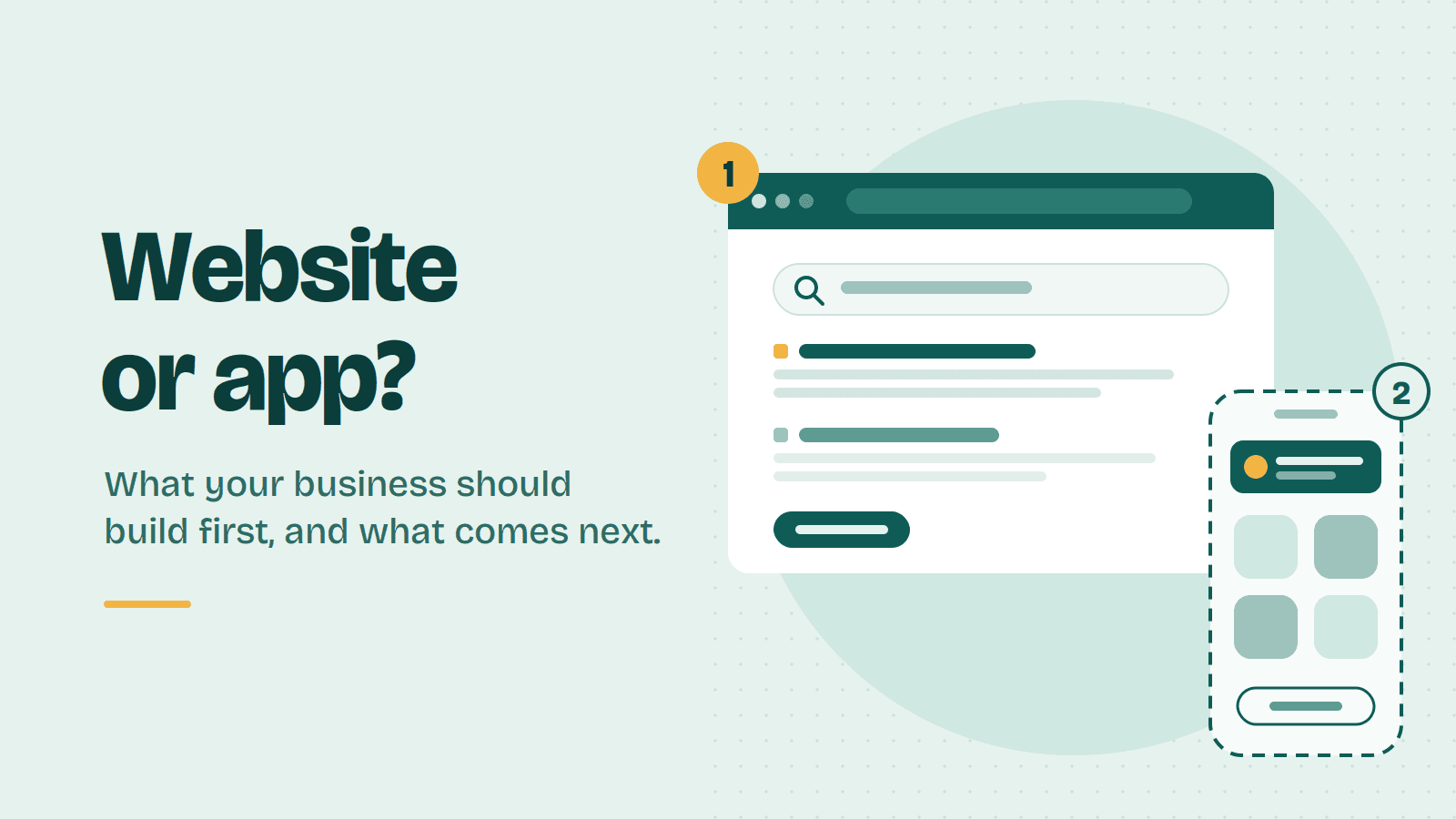
A website is how new customers find you. An app is how existing customers stay with you. Those are different jobs, and most businesses need the first one long before the second.
Why a website usually comes first
People search before they download
When someone needs a service, they search Google, ask a friend or tap a link someone shared. All of those lead to a web page, not an app store. Very few people download an app from a business they've never heard of. A website meets them where they already are.
It works on every device, instantly
A well-built website works on any phone, tablet or laptop with no install and no storage space needed. That matters when most of your visitors arrive on a phone, often on a patchy connection.
It's how Google gets to know you
Search engines read websites, not apps. Every useful page you publish, such as a service page, a guide or a case study, is another way for the right customer to find you. An app does very little for your search visibility.
It's faster and simpler to launch and change
A website can go live, be updated and be improved any day of the week. An app has to go through App Store and Google Play review for every update, and people have to install those updates before they see them.
When an app is worth it
An app earns its place when it does something a website genuinely can't, or does it much better. Look for these signs:
Customers use you often. Ordering every week, booking regularly or checking something daily. If people only visit once or twice a year, an app will mostly sit unopened.
You need features of the phone itself. Reliable push notifications, the camera, location tracking, Bluetooth devices or working offline.
Speed of repeat use matters. One tap from the home screen, saved details and a quick checkout can make a real difference for loyal customers.
Your team needs a tool in the field. Staff collecting data on site, drivers updating deliveries or technicians logging jobs often work better with an app built for the job.
If none of these apply yet, a fast, mobile-friendly website will serve you better, and you can always add an app later.
The middle ground: a website that feels like an app
There's an option between the two that many businesses overlook. A modern web app can be added to the home screen, load quickly, remember a customer's details and even work with a weak connection. For things like customer portals, booking flows and dashboards, this often gives you most of the benefits of an app at a fraction of the effort, with nothing to download.
Three quick questions to decide
How do new customers find you today? If it's search, social media or word of mouth, you need a strong website first.
How often does a typical customer come back? Weekly or daily points towards an app. Occasionally points towards a website.
Do you need the phone's own features? Notifications, camera, location or offline use are the clearest reasons to build an app.
What to keep in mind about cost
Building is only part of the picture. A website has hosting and occasional updates. An app has the build itself, plus store accounts, keeping up with new iPhone and Android versions, and usually a backend and admin panel behind it. That's why we recommend building an app once you know people will use it regularly, not as a first step to "look established".
The good news is that a website built well from the start makes a later app easier. The design, content and backend you create for the website can often be reused.
A sensible path for most businesses
Launch a fast, mobile-first website that explains what you do clearly and makes it easy to get in touch.
Help people find it with solid SEO and useful content that answers your customers' questions.
Watch how customers use it. Analytics will show what they come back for.
Build the app when the need is clear, focused on the things your regular customers do most.
A website helps people find you. An app helps the people who already love you come back faster. Build them in that order and each one makes the other stronger.
Not sure which fits your business?
Every business is a little different, and sometimes the answer really is "both, together". If you'd like a second opinion, tell us what you're building and we'll suggest the right first step, with a clear quote before any work starts.
You can also read more about how we approach website development, mobile app development and SEO.